
Portland winters are cold and damp enough without your heat pump turning into a block of ice. Add an unexpectedly high electric bill, and you’ve got a couple of good reasons to be concerned.
Fortunately, a little frost on your outdoor unit is perfectly normal. But when ice starts building up, it could signal an airflow issue, a defrost cycle problem, or another component affecting your heat pump’s performance.
We’ll explain what’s causing the ice, why your heating costs may be climbing, and how to recognize when it’s time to call an HVAC technician.
Table of Contents
- Is Frost on a Heat Pump Normal?
- 5 Reasons Why Your Heat Pump Condenser Is Freezing Up in Winter
- At What Temperature Does a Heat Pump Freeze Up?
- Why Your Electric Bill May Have Spiked After a Frozen Heat Pump: Emergency Heat Mode Explained
- Heat Pump Defrost Cycle Not Working? When to Call an HVAC Technician
- How Do You Keep Your Heat Pump From Freezing Up?
- Get Your Frozen Heat Pump Running Again With AAA Heating and Cooling
Is Frost on a Heat Pump Normal?
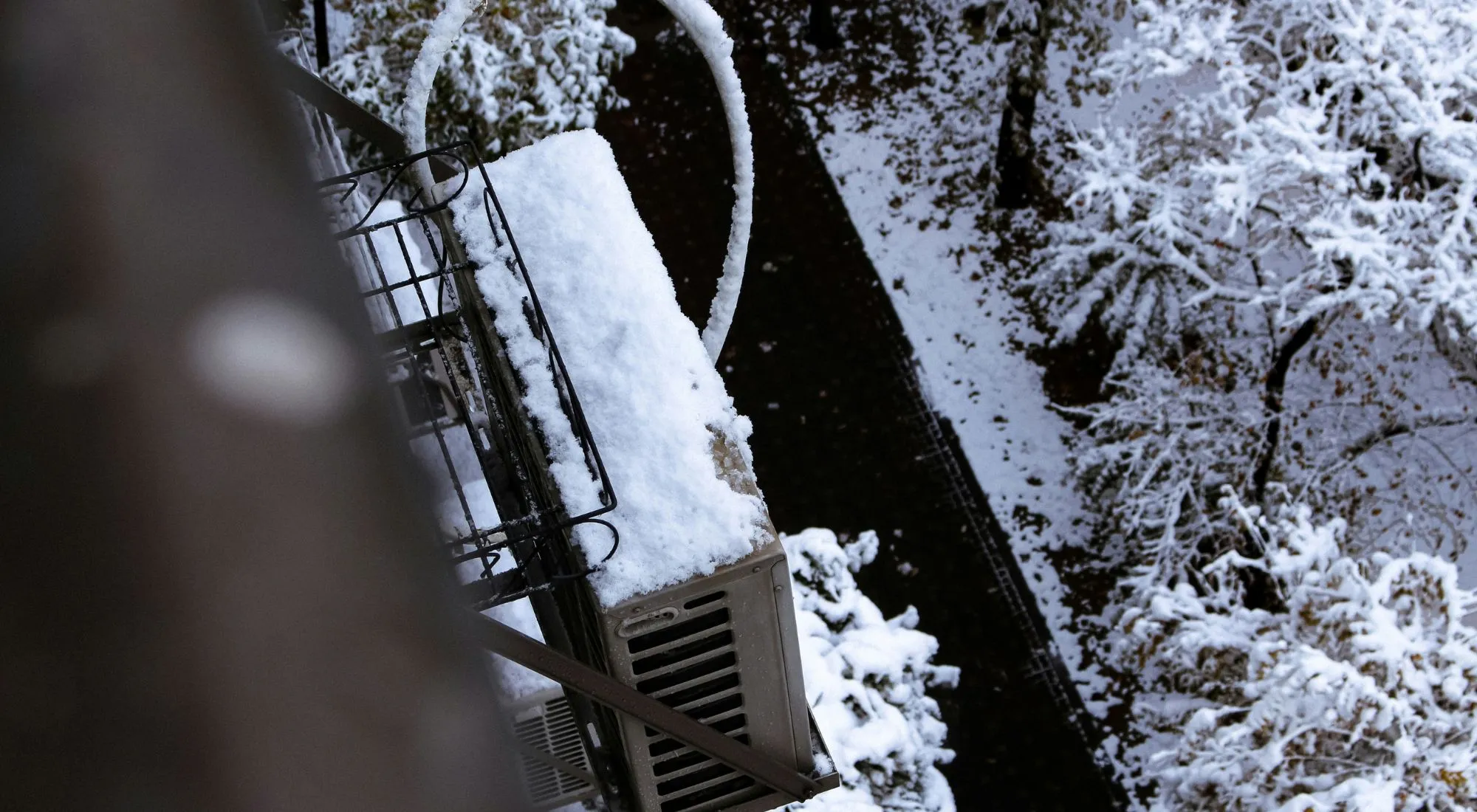
Yes! A thin layer of frost on your heat pump is perfectly normal during Portland’s chilly winters. When your pump is heating your home, the outdoor coil gets colder than the surrounding air, causing moisture to collect and freeze. Your system’s built-in defrost cycle should melt that frost away automatically.
Thick ice buildup, on the other hand, deserves a closer look. If ice covers the coils, prevents the fan from spinning, or sticks around for hours, your heat pump may be struggling to defrost properly.
Other warning signs include unusual sounds or airflow issues, such as grinding, loud buzzing, or lukewarm air coming from your vents.
A quick way to tell the difference:
- Normal: A light dusting of frost that disappears during the defrost cycle.
- Cause for concern: Thick ice covering the coils or interfering with the outdoor fan.
- Time to call a pro: Persistent ice buildup accompanied by poor heating performance or unusual noises.
If your outdoor unit looks more like an ice sculpture than a heat pump, AAA Heating & Cooling is happy to help. Give us a call to schedule an appointment, or fill out our online contact form, and an advisor will reach out within 24 hours.
5 Reasons Why Your Heat Pump Condenser Is Freezing Up in Winter
If you’re wondering, “Why is my heat pump freezing up in the winter?” the answer usually comes down to airflow, refrigerant levels, a faulty component, or drainage issues. Some problems have simple fixes; others need a professional diagnosis.
#1: Restricted Airflow From a Dirty Filter
A clogged air filter restricts airflow through your indoor system, making it harder for your heat pump to heat your home efficiently. Although a dirty indoor filter isn’t typically the direct cause of ice on the outdoor coil, it can contribute to poor heating performance.
During Portland’s colder months, your system gets plenty of use. A filter that looked fine in October may need replacing by January.
What you can do: Check your filter monthly and replace it when dirty, following the manufacturer’s recommendations. It’s an inexpensive fix you can usually handle yourself.
#2: Low Refrigerant or a Refrigerant Leak
Your heat pump uses refrigerant to absorb heat from the outdoor air and transfer it indoors. If the refrigerant charge is too low, the system may struggle to heat your home and develop abnormal ice buildup.
Persistent ice accompanied by weak heating could indicate a refrigerant problem, particularly if the outdoor unit is clear of debris.
What you can do: Leave this one to a professional. Refrigerant circulates through a sealed system, so low levels may indicate a leak or an incorrect initial charge. A technician can identify the cause and determine the appropriate repair.
#3: A Defrost Control Board or Sensor That Isn’t Working
Your heat pump relies on sensors and controls to determine when the outdoor coil needs defrosting. If one of these components fails, frost can continue accumulating until it becomes a thick layer of ice.
If the light frost you noticed at breakfast has turned into a mini ice rink by lunchtime, your defrost system may need attention.
What you can do: Schedule an inspection with a Portland HVAC company. A technician can test the defrost controls and related electrical components to identify what’s preventing the system from clearing the ice.

#4: Dirty Outdoor Coils and Debris
Between falling leaves and damp winter weather, Portland homeowners have plenty of opportunities for debris to collect around their outdoor units.
Leaves, dirt, and other buildup can restrict airflow through the outdoor coil, reducing heat transfer and contributing to excessive frost formation.
What you can do: Remove loose leaves and debris from around the unit, keeping the surrounding area clear. Avoid scraping ice or using sharp tools on the coils, which can damage delicate components. Leave thorough coil cleaning to an HVAC technician.
#5: Installation and Drainage Problems
During a normal defrost cycle, melted frost drains away from the outdoor unit. But if the heat pump sits too close to the ground, the mounting pad has settled, or drainage is obstructed, water can collect and refreeze underneath.
Repeated ice buildup around the base may eventually interfere with the outdoor fan or other components.
What you can do: Look for standing water or obvious drainage obstructions around the unit. If ice repeatedly forms underneath your heat pump, a technician can evaluate the drainage and mounting setup to determine whether adjustments are needed.
At What Temperature Does a Heat Pump Freeze Up?
A heat pump can develop frost at outdoor temperatures as high as 35°F or warmer if the outdoor coil drops below freezing. However, there’s no single temperature that causes a heat pump to freeze up. Humidity, airflow, and the system’s defrost cycle all influence ice formation.
Portland’s winter temperatures often hover in the 30s and 40s, when moisture in the air can easily freeze on the outdoor coil. Fortunately, your heat pump is designed to handle occasional frost through its automatic defrost cycle.
Modern cold-climate heat pumps can operate in temperatures as low as -13°F, although heating capacity and efficiency vary by model. Even older systems can function in freezing weather, but their operating limits may differ.
If ice continues building up instead of melting away, an underlying mechanical issue may be responsible. A technician can determine whether your system needs attention before its heating performance suffers.
Why Your Electric Bill May Have Spiked After a Frozen Heat Pump: Emergency Heat Mode Explained
When your heat pump freezes, ice can prevent the outdoor coil from absorbing enough heat to warm your home. Depending on your system, supplemental electric heat may kick in to help maintain your indoor temperature, which can lead to a noticeable increase in your electric bill.
The difference comes down to efficiency. Heat pumps can deliver roughly three to four times as much heat energy as the electricity they consume. Electric resistance heating, commonly used for emergency heat mode, produces about one unit of heat for every unit of electricity used. That means relying on backup heat can cost considerably more.
Your thermostat may display “AUX HEAT” when supplemental heating is running or “EM HEAT” when emergency heating mode is selected. Auxiliary heat can operate normally during particularly cold weather, but frequent or prolonged use, especially alongside ice buildup, may indicate a problem.
If your electric bill has climbed unexpectedly and your heat pump is struggling to keep your home comfortable, it’s a good idea to schedule an inspection. AAA Heating & Cooling can identify what’s causing the issue and help restore efficient operation.
Heat Pump Defrost Cycle Not Working? When To Call an HVAC Technician
Your heat pump’s defrost cycle clears frost from the outdoor coil so the system can continue heating your home. During cold weather, many systems check for defrost conditions at intervals of 30 to 90 minutes. A cycle typically lasts around 5 to 15 minutes, though timing varies by model and outdoor conditions.
You might notice steam rising from the outdoor unit or hear the fan temporarily stop as accumulated frost melts. These are normal parts of the process. Check your owner’s manual for details about your system’s operation, and watch for signs that it needs professional attention:
- Frequent defrost cycles: Your heat pump repeatedly switches into defrost mode every few minutes, even when there isn’t much frost.
- Persistent ice buildup: Thick ice remains on the outdoor coil after a complete defrost cycle or continues accumulating throughout the day.
- Unusual noises or poor heating: You hear grinding sounds, see ice interfering with the outdoor fan, or notice that the system runs without adequately warming your home.
If you notice any of these issues, schedule an inspection so a technician can identify the cause and recommend the appropriate repair.
What to Do (and Not Do) Until the Technician Arrives
If your heat pump is heavily iced over, turn it off to prevent further damage, particularly if ice is obstructing the outdoor fan. Allow the ice to melt naturally and gently clear any loose snow or debris from around the unit.
Avoid pouring hot water over the equipment or attempting to chip away ice with tools. The outdoor coil has delicate fins and refrigerant tubing that can be damaged, potentially turning a manageable repair into a much more expensive one.
Leave electrical components, refrigerant lines, and internal troubleshooting to your HVAC technician. AAA Heating & Cooling can inspect the system, identify what’s interrupting the defrost cycle, and recommend the appropriate repair.
How Do You Keep Your Heat Pump From Freezing Up?
To help prevent your heat pump from freezing up, replace dirty air filters, keep the outdoor unit clear of debris, ensure proper drainage, and schedule annual maintenance. These steps support efficient operation and help your system’s defrost cycle manage normal winter frost.
A little preparation goes a long way during Portland’s colder months. Follow this checklist to keep your heat pump in good shape:
- Check your air filter monthly. Replace it when dirty, following the manufacturer’s recommendations.
- Give your outdoor unit some breathing room. Clear away leaves, snow, and other debris, maintaining the clearance recommended by the manufacturer.
- Watch for drainage problems. Make sure melting frost can drain away without pooling or refreezing around the base.
- Book a professional tune-up. An annual fall maintenance visit allows a technician to clean the coils, inspect the system, and address potential issues before winter.
Get Your Frozen Heat Pump Running Again With AAA Heating and Cooling
Nobody wants to spend a Portland winter bundled up in a parka inside their own living room. If your heat pump keeps freezing up or your electric bill is climbing, AAA Heating & Cooling is ready to help.
We’ve been a family-owned business since 1961, proudly serving Portland, Beaverton, and the surrounding Metro Area. With more than 60 years of experience, we believe in treating our customers like family and building relationships that last.
Give us a call to speak directly with a representative and schedule an appointment. Prefer to reach out online? Fill out our contact form, and an advisor will get back to you within 24 hours.