
It’s not uncommon to find yourself in a room with someone who experiences temperature differently than you do. Maybe your wife feels colder and keeps asking you to turn the thermostat up, or your coworker feels warmer, and the temperature battle begins when you set it too high, and they push it too low. Then there’s your child, who constantly messes with the AC controls, leaving you with no AC at all.
But even more frustrating than that is arguing with the AC itself, because, let’s face it, you have no idea what’s going wrong. You hear the system running, but the rooms are still warm. You check the settings, and everything seems fine. You even step outside to check the unit, and it looks okay. Trying to figure out what’s going on with your AC can be tricky, and it can happen to anyone.
In this article, we’ll cover some of the most common reasons your AC might not be cooling properly and suggest possible solutions to get it back on track.
Table of Contents
- Why Is My AC Running but Not Cooling Enough?
- 9 Reasons Why an AC Might Not Be Cooling Properly
- When Your AC Isn’t Cooling, Try These Troubleshooting Steps
- When Easy Fixes Don’t Solve the Problem, Call in the AC Professionals
- When Your AC Isn’t Cooling, Call the Team at AAA Heating and Cooling for Repairs or Replacement
Why Is My AC Running but Not Cooling Enough?
If your AC is running but your home still feels warm, low airflow or other issues could be the reason why your AC is not cooling properly. Common causes include blocked vents, a dirty outdoor unit, or low refrigerant, problems that can leave your home uncomfortably warm. Here are some common problems that can affect your AC’s performance.
9 Reasons Why an AC Might Not Be Cooling Properly
#1: Dirty Air Filter
If your air filter gets clogged with dust, it blocks the airflow in your AC. The system then has to work harder to keep your home cool, which makes it less efficient and can even cause it to ice up.
To avoid these issues, replace your air filter every one to three months. How often you need to do this depends on how much you use your AC, the air quality in your home, and if you have pets or allergies. In the summer, check your filter each month.
A clean filter helps your AC run smoothly, keeps your home’s air cleaner, and can make your cooling system last longer.
#2: Blocked Condenser Coils
The outdoor unit, called the condenser, lets heat escape from your home. When dirt, leaves, or debris pile up around it, airflow is blocked. This makes it tougher for your AC to cool your home, so it uses more energy and wears out faster.
Make sure there is at least 2 or 3 feet of open space around your unit and clear away any debris often. You can gently wash the coils with a hose, but always turn off the power before you do.
Cleaning your AC regularly helps it run better and reduces strain on the system.
#3: Thermostat Issues
If your thermostat is set incorrectly, your AC might not cool your home the way you want.
Set your thermostat to “cool” mode, not “fan.” The “fan” setting only moves air around without lowering the temperature. It also helps to set the fan to “auto,” so it runs only when cooling. If your AC still isn’t working right, try lowering the temperature or changing the thermostat batteries.
Keeping the right settings on your AC helps it run efficiently and keeps your home cool.
#4: Tripped Circuit Breaker
If your AC isn’t cooling but the indoor fan is still running, a tripped circuit breaker might be the cause. In most cases, this means the outdoor unit has lost power while the fan continues to run.
Check your electrical panel for any tripped breakers and reset them carefully. If the breaker trips again, or if the AC still doesn’t cool after a power outage, it could indicate a bigger electrical problem or damage to internal components. In that case, it’s best to call a professional for help.
At AAA Heating & Cooling, our experts inspect your AC system, find any electrical or mechanical problems, and suggest the right repairs to keep your system running smoothly. We work to prevent future issues, so you can stay comfortable all season.
#6: Low Refrigerant Levels or Leaks
Your AC needs refrigerant to remove heat from your home. If there’s a leak or the level is too low, your AC won’t cool well and may blow warm air. Signs of low refrigerant include ice on the evaporator coil, hissing sounds, or weak cooling even when the AC runs nonstop.
To fix this, hire a licensed technician to find and repair any leaks and safely refill the refrigerant.
#7: Bad Capacitor
The capacitor is a small but important part that helps your AC’s fan and compressor start. If it stops working, your AC might make a humming noise, run weakly, or not start at all, which means it won’t cool your home properly. You might notice the outdoor fan not spinning, strange noises, or poor cooling, even though the unit has power.
Capacitors don’t cost much and are easy to replace, so fixing this problem is usually quick and gets your AC working again.
#8: Compressor Problems
The compressor is like the heart of your AC, moving refrigerant to remove heat from your home. If it stops working, your system may still run, but won’t cool properly. Problems like electrical issues, overheating, or normal wear and tear often cause compressor trouble. If you hear odd sounds, see the outdoor unit not starting, or feel warm air when the AC is on, your compressor might need attention.
Since fixing or replacing a compressor can be expensive, having a warranty or service plan can help protect your budget.
Only licensed technicians should repair compressors to keep your system safe and working as it should.
At AAA Heating & Cooling, our team of experts is ready and glad to check your AC compressor and replace it if needed. We are proud to offer honest service and fair pricing, so you can enjoy your system running smoothly.
#9: Aging or Undersized Cooling System
Older AC units often become less efficient, and units that are too small for the space will struggle to keep it cool.
If your AC unit is over 10 to 15 years old or struggles to keep up during hot weather, it might be time for a replacement. When choosing a new unit, remember that you’ll need about 20–25 BTUs per square foot. For example, a 1,500-square-foot home typically needs 30,000 to 37,500 BTUs.
An AC system that fits your home will work efficiently, last longer, and keep your space comfortable all year.
When Your AC Isn’t Cooling, Try These Troubleshooting Steps
Sometimes your AC isn’t cooling properly. With some simple air conditioner troubleshooting for units not cooling, you can often identify and fix the problem without calling a professional. Many times, the issue is something small and easy to fix. Before scheduling a visit, try the following basic troubleshooting steps; they might help you save time and money while getting your home comfortable again faster.
- Step 1: Check the filter: If it’s dirty or clogged, it can block airflow and make your system work harder than it needs to, and it becomes less effective. Just remove the filter and take a look. If it looks dusty or blocked, you can replace it. This simple step can immediately improve both airflow and indoor air quality.
- Step 2: Check the thermostat: Make sure it’s set to “cool” and not “fan” or “heat.” It’s also a good idea to set that fan to “auto,” since it allows the system to cycle properly, instead of running constantly. If your thermostat uses batteries, try replacing them; many times that solves the issue.
- Step 3: Check the outside unit: Your outdoor condenser plays an important role in cooling your home. It’s a good idea to start by checking if it’s actually working, listening for the fan or compressor. You can then check the area around it and make sure that dirt, leaves, grass clippings, or other debris aren’t blocking it. Clean it and make sure there’s at least a couple of feet of open space around the unit.
- Step 4: Check the breakers: If your AC will not turn on, there might be an electrical issue. Go to your home’s electrical panel and see if any breakers have tripped. If you find one, reset it and check if your system works again. If the breaker trips a second time, it is best to call a professional for help.
When Easy Fixes Don’t Solve the Problem, Call in the AC Professionals
If you’ve tried the basic fixes and your AC still isn’t working, the problem could be more complicated. At this point, it’s best to call a trained technician who has the right skills and tools to find and fix the issue safely.
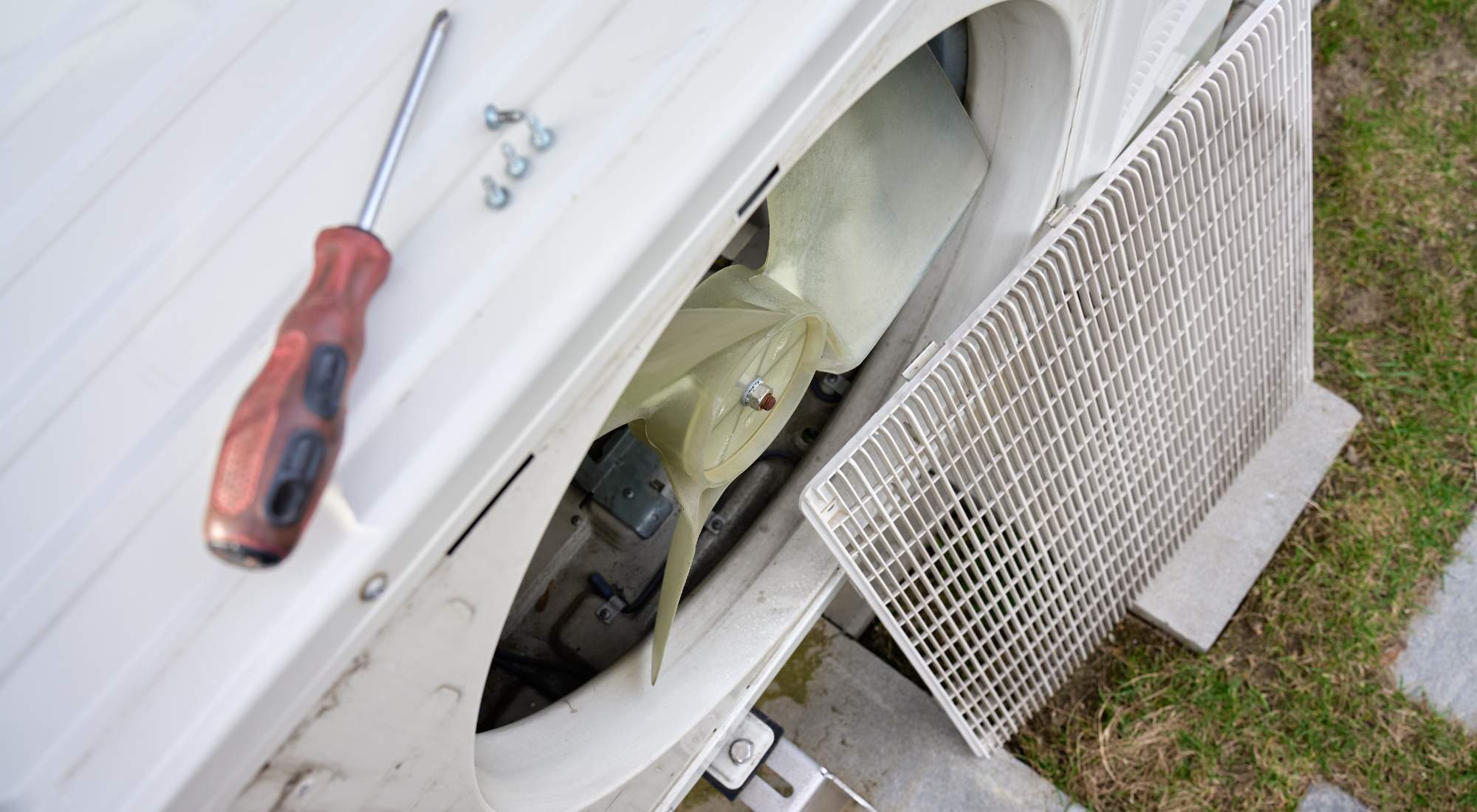
Improperly Functioning or Broken Fan Motor
The fan motor helps move cool air around your home. If it stops working, you may notice the airflow is weak or gone. The issue might be with the motor, the capacitor, or the wiring. Because these parts use electricity, it is safest to have a qualified technician do the repairs.
Low Refrigerant or a Leak
If your AC isn’t cooling well, low refrigerant might be the cause, often because of a hidden leak. Finding leaks and adding refrigerant requires special tools, so it’s best to call a certified technician.
Broken Compressor
The compressor pumps refrigerant to keep your home cool. Since repairs can be difficult and costly, it’s best to let a professional handle the job safely and properly.
Your AC might sometimes have issues with sensors, control boards, or other internal parts that affect its performance. These problems can be tricky to spot and often require electrical or mechanical repairs. Our technicians at AAA Heating & Cooling have the experience and tools to fix these issues and keep your system working smoothly. For reliable Portland air conditioning maintenance, contact us today to learn more.
When Your AC Isn’t Cooling, Call the Team at AAA Heating and Cooling for Repairs or Replacement
At AAA Heating & Cooling, we provide reliable, high-quality HVAC products and services for homes and businesses in Portland. As a leading heating and cooling contractor, we work hard to keep your space comfortable, energy-efficient, and climate-controlled, while also improving indoor air quality.
We offer a full range of services, including air conditioning installation, repair, and maintenance, furnace and heating system care, duct cleaning and sealing, indoor air quality solutions, and thermostat upgrades.
Don’t wait for your AC or heating system to break down. Contact us today and see the difference our HVAC experts can make.